 OneFix Golf
Join the beta
Head movement in the golf swing: how much is too much
"Keep your head still" is the oldest tip in golf and it is half right. The head does move in a good swing. The question is where it goes and when.
The head may move a few centimetres in a golf swing. What matters is that it is still behind the ball at impact and at about the same height as at address. A head that moves toward the target or rises through impact changes where the club reaches the ground.
- Film it
- Face-on
- Aim for
- Head stays behind the ball at impact, and within a few centimetres of its address height
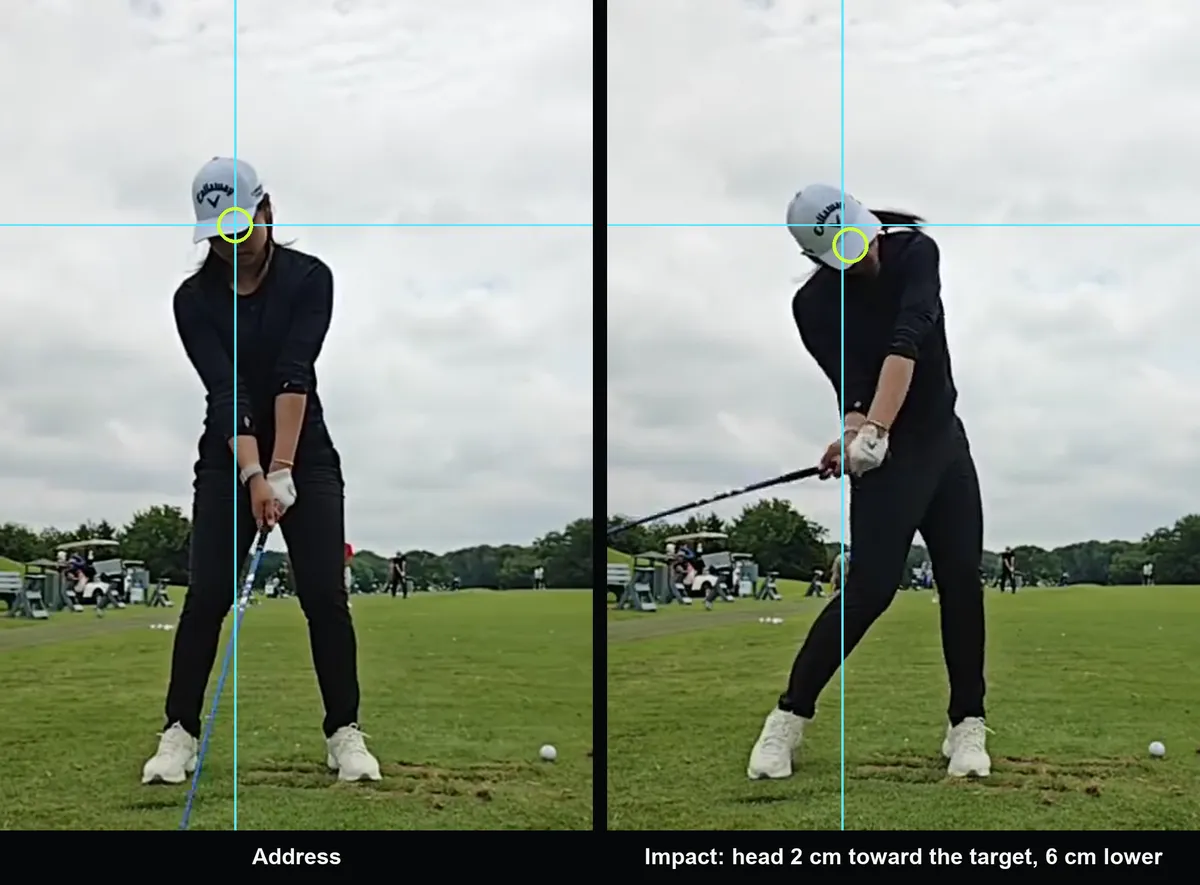
What a good head does
In the backswing the head can drift a little away from the target as you turn. That is fine and most good players do it. What matters is the downswing: at impact the head should still be behind the ball, not sliding toward the target with the hips.
Height matters as well. A head that rises through impact means you are standing up, and the bottom of the swing moves with it. A head that drops means the opposite, and usually a heavy strike.
What it costs you
When the head moves toward the target before impact, the whole upper body goes with it. The club arrives steep, the low point moves forward and you hit down on a driver you wanted to hit up on.
When the head rises, thin shots and tops follow. When it dips, fat shots follow. Both come from the same cause: the distance between your chest and the ball changed during the swing.
How to check it on video
Film face-on with the phone at chest height. Pause at address and note where your head is against something in the background. Step to impact and compare.
OneFix Golf measures two numbers here. Head sway is the sideways distance between address and impact. Head height is how far the head rose or dropped. It uses the centre of your eyes, ears and nose, because the nose alone swings sideways every time you turn your head to look at the ball.
The drill: shadow check
- With the sun behind you, set up so you can see the shadow of your head on the ground.
- Mark where it is at address.
- Swing and keep the shadow at or behind that mark through impact.
- Two sets of ten swings.
Indoors, set up with your forehead lightly touching a wall and make slow swings keeping the same contact.
Related guides
- Hip sway vs hip turnFace-on
- Losing posture at impactDown the line
- Weight shift to the lead sideFace-on
More on swing faults
- Early extension and how to stop itDown the line
- Over the top: where it startsFace-on for the sequence, down the line for the club path
- Bent lead arm at the topFace-on or down the line
- How to fix a sliceDown the line for the path, face-on for the sequence
Updated 16 November 2026. See how the app measures and the glossary.